
The History of North Baltimore, MD: Mill Villages, Garden Suburbs, and What They Mean for Buyers Today
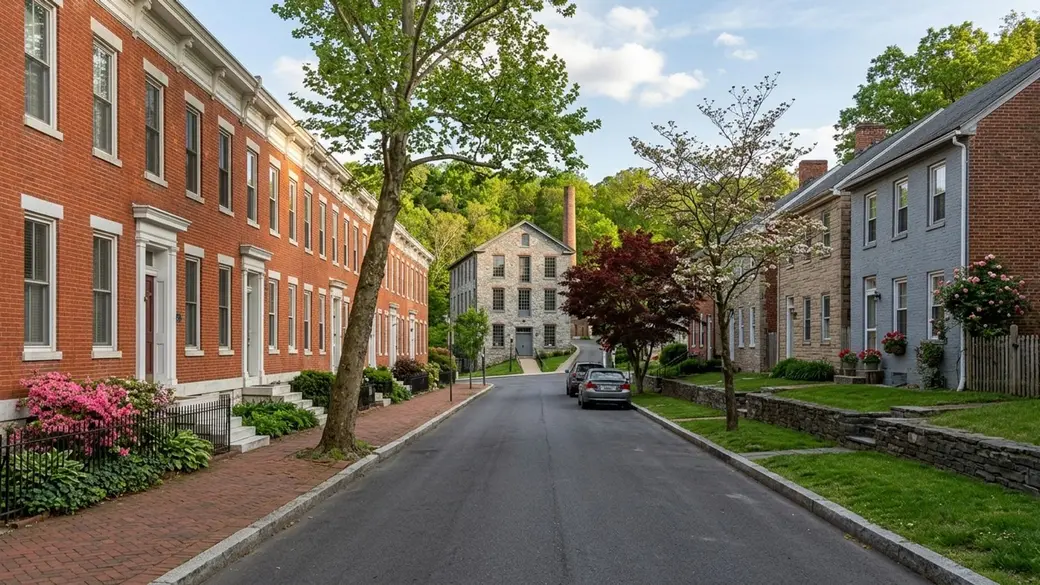
The housing stock in North Baltimore, MD, traces back to two distinct ways the area was built. Along the Jones Falls, water-powered mills and the villages that surrounded them grew into dense rowhouse neighborhoods over the nineteenth century. Further out, developers turned old country estates into some of the earliest planned streetcar suburbs in the country, prioritizing detached homes and deep lots.
That architectural split still dictates the local real estate market. Buyers looking in the planned suburbs face tight inventory and heavy competition, while those shopping in the former mill districts find more space for their money. These neighborhood histories tell you a lot about what to expect on prices, property types, and renovation rules when you're making an offer.
Key Takeaway
North Baltimore grew out of two histories: planned garden suburbs like Roland Park and Guilford, and the mill villages and rowhouse blocks along the Jones Falls. That split still drives the market today. Detached houses are the scarce half, with 31.3% of single-family sales closing above list price, so if you want room to negotiate, start with the rowhouse districts instead.
Who This Guide Is For
You're considering a home in North Baltimore and want to understand how the area's history, from its planned suburbs to its mill villages and historic districts, affects the houses, rules, and prices you'll be choosing between.
How North Baltimore's History Shaped Its Housing
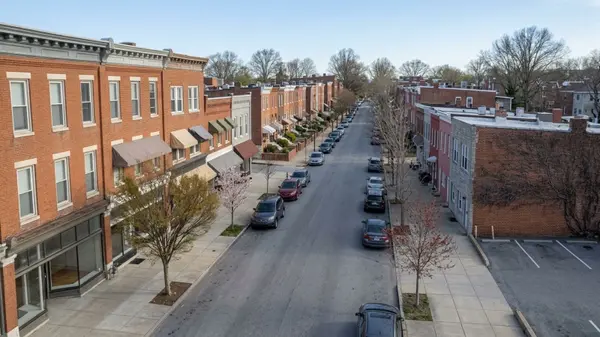
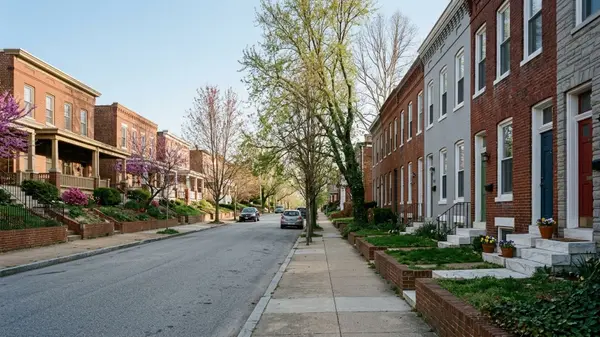
North Baltimore's history built two different housing stocks. The planned garden suburbs laid out from 1891 onward are mostly detached houses on larger lots. The older mill villages and streetcar rowhouse blocks are mostly attached homes sharing party walls.
For the bigger picture, see Pros and Cons of Living in North Baltimore.
That split still sets the market today, and the data is driven by home type across North Baltimore rather than by individual neighborhood. Single-family homes currently have just 2.5 months of supply, while townhouses have 5.5 months. Buyers compete hard for detached houses, but in the rowhouse half of the market they have more choice and a stronger negotiating position.
What Is Considered North Baltimore?
North Baltimore is an informal name, not an official city district. It generally means the northern part of Baltimore City between roughly North Avenue and the city line, west of Northeast Baltimore. The exact boundaries vary depending on who you ask, but the area sits entirely inside Baltimore City, not Baltimore County.
Representative neighborhoods include Roland Park, Guilford, Homeland, Hampden, Woodberry, Remington, Charles Village, Mount Washington, and Cross Keys. It is also a completely separate place from North Baltimore, Ohio.
North Baltimore History Timeline
The area's earliest development centered on the Jones Falls, where water-powered mills began manufacturing cotton duck canvas for sails. By 1880, Hampden village had merged with an older settlement, and in 1888, Baltimore City officially incorporated the large mill town of Hampden-Woodberry. Away from the mills, families in country estates such as Homewood, built for Charles Carroll Jr., and Evergreen, both later tied to Johns Hopkins, maintained the land before the area was fully developed.
A second major annexation followed in 1918, extending the limits of Baltimore City to include more parts of Baltimore County. Streetcar lines opened the hills to new development, and the Roland Park Company built a planned suburb starting in 1891 with involvement from the Olmsted Brothers firm. Guilford and Homeland followed, establishing the garden suburbs that still define the northernmost sections of the city. The mill era faded over time, and many of the old stone and brick buildings were repurposed for modern uses.
North Baltimore's Planned Suburbs and Mill Villages
The core trade-off for buyers in North Baltimore comes down to choosing between the planned garden suburbs and the older mill and rowhouse districts. Each offers a distinct style of architecture and a different level of market competition.
The detached-house half of the market is scarce and moves fast. The rowhouse half gives you more space per dollar and a better negotiating position.
Roland Park, Guilford, and Homeland
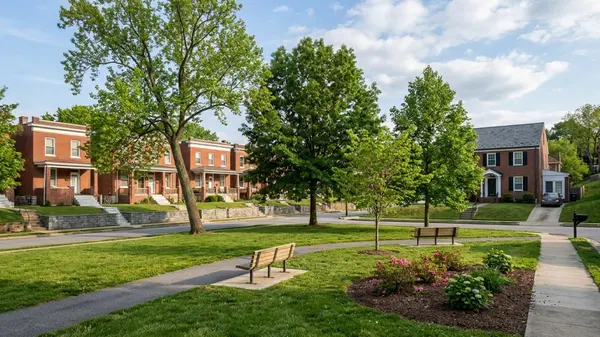
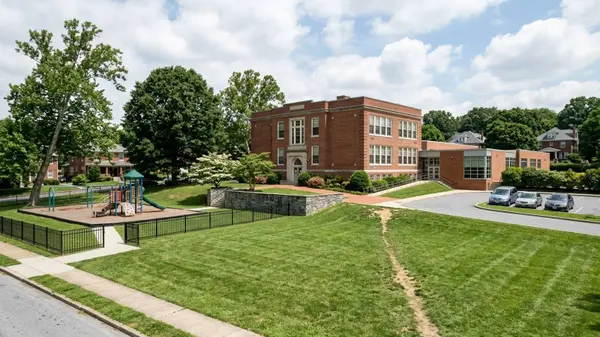
These planned garden suburbs have curving streets laid out around the natural terrain, deep lots, and detached houses built in various period styles. The Roland Park Company used deed restrictions to control how the neighborhoods looked, a practice that shaped the area's visual character. This is where most of North Baltimore's detached stock is concentrated.
The single-family median sale price recently hit $532,412, with homes selling at 100.5% of list price. In practice, plan to pay full asking price or more. The covenants that made these suburbs aren't just history, either. Neighborhood associations still enforce architectural restrictions and may collect annual assessments, so exterior changes like fences, additions, or paint can need approval. Ask the seller and the neighborhood association for current deed restrictions, architectural review rules, and any annual assessment before you make an offer.
Hampden, Woodberry, Remington, and Charles Village
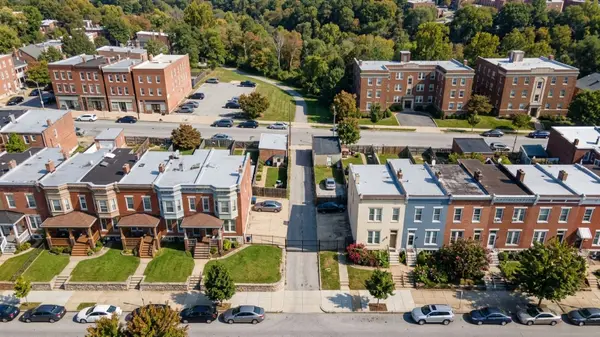
The mill villages and rowhouse districts offer a different housing stock, from stone and brick mill housing along the Jones Falls to the larger turn-of-the-century rowhouses of Charles Village. Townhouses had a $255,000 median sale price and sold at $176 per square foot, compared to $248 per square foot for single-family homes. The same budget buys noticeably more room here.
What you give up is modern construction. Many of these houses are over a century old and share party walls, so expect older wiring, plumbing, and roofs, along with lead-based paint disclosures for any pre-1978 home. Some blocks fall inside Baltimore City local historic districts, where exterior work needs approval. Get a full home inspection, ask for permit history on older rowhouses, and look up the address in the city's historic district list before you budget a renovation.
Buying a Home in a North Baltimore Historic District
Buying an older home means working through local preservation rules, so learn them before you fall in love with a street.
A National Register listing is mostly honorary for private owners, but Baltimore City local historic districts administered by the Commission for Historical and Architectural Preservation (CHAP) require approval for exterior changes. All exterior work, including color changes, excavation, and new structures, requires a building permit that the Building Official may not issue without prior CHAP approval.
The upside: Baltimore City offers a 10-year historic restoration and rehabilitation property tax credit for qualifying projects that equal or exceed 25% of the property's pre-rehabilitation full cash value. The Maryland Historical Trust also administers a state income tax credit for homeowners of certified historic structures. Confirm historic tax credit eligibility with CHAP or the Maryland Historical Trust and a tax professional before counting on it in your numbers.
When reviewing property records, you may encounter old deed restrictions. The Roland Park Company pioneered the systematic use of racially restrictive deed covenants when developing these suburbs. These clauses became legally unenforceable nationwide after the U.S. Supreme Court's 1948 decision in Shelley v. Kraemer and are completely void today. Have your title company report any recorded covenants on the property.
North Baltimore Housing Market Today
The overall median sale price across North Baltimore is $308,414, up 4.6% year over year. Prices are rising modestly rather than surging, which means picking the right home type matters more than trying to time the market.
Condos are where buyers have the most room to work with, showing a 49-day median time on market and a 98% average sale-to-list ratio. That softer pace leaves room to ask for a lower price or seller concessions. However, a condo's lower entry price buys less space per dollar than a townhouse. Mike Fielder at Cummings & Co. Realtors can pull recent sales for a specific street to help you compare options.
Which Part of North Baltimore Fits Your Search?
Where you look depends on what kind of space you need and your tolerance for renovation rules. These four questions can help narrow it down.
- Do you need a detached house with a yard? Read the Roland Park, Guilford, and Homeland profile and the market section, and plan to offer at or near list price.
- Do you want the most space for your budget or room to negotiate? Read the Hampden, Woodberry, Remington, and Charles Village profile and the condo figures in the market section.
- Are you comfortable getting approval before changing windows, siding, fences, or paint? Read the historic district section before you shortlist a street.
- Are you planning a major renovation? Read the tax-credit part of the historic district section, because the rules and credits can change what the project costs.
Historic Places to Visit in North Baltimore
You can see much of this history in person by walking the neighborhoods or visiting preserved landmarks. Homewood Museum and Evergreen Museum & Library show how the area's estate owners lived before it was fully developed. Check museum hours and tour availability before visiting either one.
Along the Jones Falls, many of the original stone and brick buildings from the Hampden-Woodberry mill era are still standing and have been reused for modern purposes. Further north, the planned suburbs' curving streetscapes and period architecture are best seen on foot.
At a Glance
- All homes: median sale price $308,414, up 4.6% year over year; 296 homes sold (90 days ending 2026-09-30)
- All homes: median 36 days on market, 99.2% sale-to-list, 27.2% sold above list, 4.7 months of supply, 449 homes for sale, $202 median price per sq ft (90 days ending 2026-09-30)
- Single family: median sale price $532,412, up 3.9% year over year; 88 sold; median 36 days on market; 100.5% sale-to-list; 31.3% sold above list (90 days ending 2026-09-30)
- Single family: 2.5 months of supply, 72 homes for sale, $248 median price per sq ft (90 days ending 2026-09-30)
- Townhouse: median sale price $255,000, up 3.1% year over year; 153 sold; median 33 days on market; 99% sale-to-list; 29.8% sold above list (90 days ending 2026-09-30)
- Townhouse: 5.5 months of supply, 274 homes for sale, $176 median price per sq ft (90 days ending 2026-09-30)
- Condo: median sale price $214,900, up 3.3% year over year; 46 sold; median 49 days on market; 98% sale-to-list; 11% sold above list (90 days ending 2026-09-30)
- Condo: 4.4 months of supply, 65 homes for sale, $201 median price per sq ft (90 days ending 2026-09-30)
North Baltimore, MD History FAQs
What County Is North Baltimore, MD In?
North Baltimore is part of Baltimore City, which has been independent of any county since 1851. It is completely separate from Baltimore County. Following this 1851 separation, Baltimore County moved its seat to Towson.
Is North Baltimore the Same as Northern Baltimore County?
No. North Baltimore is located inside the city limits. Northern Baltimore County is a separate jurisdiction to the north, with its own government and county seat in Towson.
Is Northeast Baltimore Part of North Baltimore?
Northeast Baltimore is usually treated as a separate area east of North Baltimore. It has its own history groups, such as the Northeast Baltimore History Roundtable. The exact dividing line is informal and varies depending on who you ask.
Is North Baltimore, MD Safe?
To evaluate crime data, review the Open Baltimore portal published by Baltimore City. It includes a Part 1 Crime Rate per 1,000 Residents dataset sourced from the Baltimore Police Department, which can be filtered by neighborhood and date. Review this data for the specific neighborhood and time period yourself rather than relying on area reputations.
Is There a North Baltimore Historical Society?
There is no single organization called the North Baltimore Historical Society. Instead, groups like Baltimore Heritage and various neighborhood-level associations cover the area's history. Contact the specific neighborhood association for local historical records and walking tours.
What Is North Baltimore Known For?
The area is known for Johns Hopkins University's Homewood campus and historic estate museums. It is also known for the Miracle on 34th Street, an annual holiday light display in the Hampden community.
How Old Are the Homes in North Baltimore?
The age of the homes varies by area. Mill-era and rowhouse blocks date from the 1800s to early 1900s, while the planned suburbs largely date from the 1890s to the 1920s. Check Maryland SDAT Real Property records for any address's specific year built.
Sources
- Redfin: Data Center
- Maryland Historical Trust: Roland Park Historic District
- Maryland Historical Trust: Guilford Historic District
- Maryland State Archives: Hampden-Woodberry History
- Maryland State Archives: 1918 Annexation Act
- Maryland State Archives: Baltimore City History
- Baltimore City Code: Historic Districts
- Baltimore City Code: Historic Tax Credit
- Maryland Historical Trust: Homeowner Tax Credit
- Guilford Association: Architecture Guidelines
- Baltimore Sun: Racially Restrictive Covenants
- Open Baltimore: Part 1 Crime Data
- Baltimore Heritage: Roland Park
- Wikipedia: Miracle on 34th Street
Categories
Recent Posts
GET MORE INFORMATION

Sales Director, Realtor License ID: MD: 662897 / PA: RSR005460
+1(410) 905-6678 | mike@mykeyhometeam.com