
North Baltimore, MD Weather Patterns: Seasons, Storms and What They Mean for Your Home
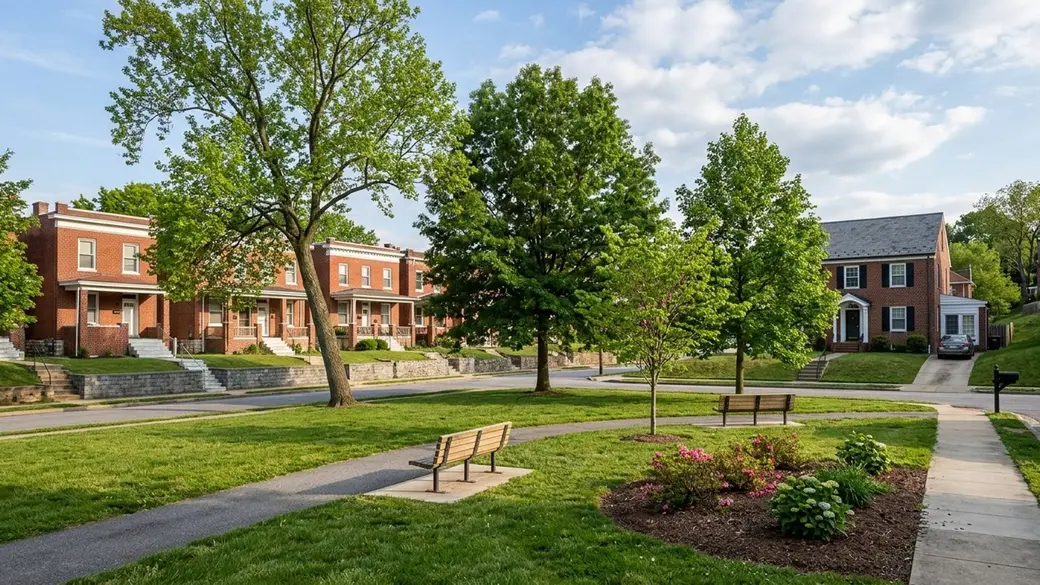
Buy a house in North Baltimore, MD, and the weather becomes part of your maintenance schedule whether you plan for it or not. Baltimore carries an official humid subtropical climate classification, which means a real four-season cycle: hot, humid summers with fast, heavy thunderstorms and winters whose snowfall totals swing dramatically from one year to the next. Roofs, gutters, and basements take the brunt of all of it.
Summer cloudbursts and freeze-thaw winters are the two stresses that show up most often in inspection reports. How much room you have to negotiate those issues depends on the home type you choose, which makes weather a direct factor in your real estate search.
Key Takeaway
North Baltimore gets hot, humid summers with fast, heavy thunderstorms and cold winters whose snow totals swing from year to year, so the practical weather question is how well a home handles a cloudburst and a freeze-thaw winter. If you want room to negotiate roof and basement repairs, start with townhouses, which had 5.5 months of supply in the 90 days ending Sept. 30, 2026. If you'd rather hand exterior upkeep to an HOA, look at condos instead.
Who This Guide Is For
You're weighing a move to North Baltimore and want to know what the seasons bring and how much weather upkeep each type of home will hand you.
What Is the Weather Like in North Baltimore?
Baltimore is officially classified as having a humid subtropical climate. Official climate numbers typically come from Baltimore-Washington International Airport (BWI) south of the city, while the downtown Inner Harbor station often reads differently. North Baltimore sits on higher ground than the harbor, which influences local conditions.
For the bigger picture, see Pros and Cons of Living in North Baltimore.
That humid-subtropical pattern of summer cloudbursts and freeze-thaw winters lands hardest on roofs, gutters, and basements. The market currently gives townhouse buyers the most room to push back on inspection findings, thanks to 5.5 months of supply in the 90 days ending Sept. 30, 2026. Single-family buyers have the least room, facing just 2.5 months of supply in that same window.
One geography note worth keeping straight: Baltimore City's northern neighborhoods are distinct from northern Baltimore County and from the village of North Baltimore, Ohio.
North Baltimore Weather by Season
The four-season cycle here dictates your home maintenance schedule. Each season delivers a different kind of stress to a property's exterior, and the costs show up in utility bills and repair estimates rather than all at once.
Summer in North Baltimore
Summer brings heat, humidity, and late-afternoon thunderstorms that drop a lot of rain in a short window. Late-summer remnants of tropical systems also pass through the area. The urban heat island effect means tree-shaded streets and paved blocks can feel very different on the same afternoon: in NOAA's 2018 heat-mapping campaign in Baltimore, afternoon temperatures varied by as much as 17°F across the city on the hottest day sampled, with residents in the hottest neighborhoods experiencing about 103°F while the coolest parts of the city were around 86°F at the same time. Cooling costs and comfort vary by house and street.
Many older North Baltimore homes were built before central air, which matters when you're trying to gauge what a July utility bill looks like. Ask the seller for 12 months of utility bills and check the age and type of the HVAC system before you get too attached to a place.
Winter in North Baltimore
The defining characteristic of a North Baltimore winter isn't any single storm: it's variability. Some winters barely register; others shut the city down. The 2009-2010 winter set Baltimore's seasonal snowfall record at about 77 inches at BWI Airport, while other seasons have seen well under 2 inches total. Freeze-thaw cycles and occasional ice matter more for what they do to a house than the average annual total does.
Baltimore City's sidewalk snow-clearing rules become your responsibility the moment you close. Per Baltimore City code, residents must remove snow and ice from sidewalks within 3 hours after snow stops, or by 11 am if it stops between 3 pm and 6 am. Beyond the shoveling, freeze-thaw is hard on brick, mortar, front steps, and pipes on exterior walls. Ask when masonry and front steps were last repointed or repaired, and whether pipes have ever frozen.
Spring and Fall in North Baltimore
These are the easiest months to tour and move, and the most comfortable stretches to live in. For gardeners, Baltimore City falls across USDA Plant Hardiness Zones 7b and 8a, based on the 2023 map.
Spring brings heavy tree pollen. Fall brings leaf drop on tree-lined streets, and those leaves clog gutters and storm drains just as heavy rains can still arrive. A mature-tree street is genuinely pleasant to live on and requires real gutter maintenance. Ignoring it leads directly to water damage. Ask when the gutters were last cleaned or replaced, and have an arborist check any limbs sitting over the roof.
How the Weather Affects Each Type of Home
The type of home you buy dictates how much of this weather exposure you manage yourself and how much room you have when an inspection turns up weather-related wear. Those two factors pull in opposite directions depending on what you're shopping for.
Townhouses and Rowhouses
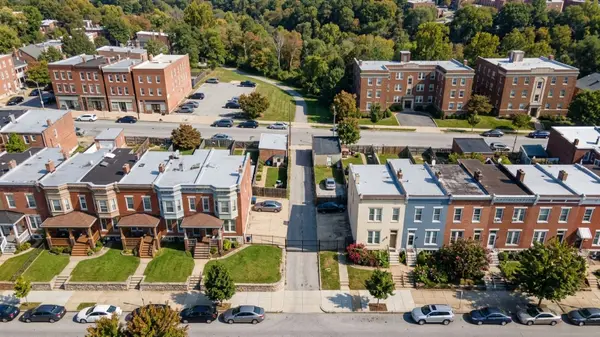
More than half the homes sold in North Baltimore in the 90 days ending Sept. 30, 2026, were townhouses: 153 out of 296 sales. Shared walls mean fewer exterior surfaces exposed to winter wind, which is a genuine advantage. The trade-off is that rooflines, flashing, and downspouts are often shared or adjoining with a neighbor, and a neighbor's roof seam or downspout can become your leak. Fixing a shared roofline or party wall means coordinating with the house next door, which adds a layer you don't have with a detached home.
Supply at 5.5 months gives buyers real room to ask for roof or drainage repairs after inspection. Get a thorough roof inspection, especially where rooflines meet adjacent properties.
Single-Family Homes
Competition shapes everything here. Almost a third of North Baltimore single-family homes, 31.3%, sold above list price in the 90 days ending Sept. 30, 2026. These homes carry the most weather exposure: a full roof, every gutter, a yard, often mature trees over the house, and sometimes a long driveway to clear.
The inspection findings that matter most are the ones you'll have the least room to get fixed. Budget for roof, gutter, and tree work yourself rather than counting on seller credits. Have an arborist look at limbs over the roof before closing.
Condos
Condos took the longest to sell of any home type in North Baltimore, a median of 49 days in the 90 days ending Sept. 30, 2026. In many buildings, the association covers the roof, exterior, and snow removal, though what's covered depends on the bylaws for your specific building. These are the slowest, most negotiable sales on price, so a buyer who wants low weather upkeep can also negotiate harder.
You still pay for the weather, just through dues and special assessments when a roof or facade needs work. Ground-floor units and garages can also take on water during heavy storms. Ask the HOA for current dues, the bylaws, the reserve study, and any recent or planned special assessments, and confirm in writing who handles snow removal and roof repairs.
Storms and Flood Risk in North Baltimore
Water is the hazard most likely to cost a North Baltimore homeowner money. Flash flooding occurs near stream corridors such as the Jones Falls and Stony Run: FEMA's Flood Insurance Study for the City of Baltimore identifies both as mapped flood sources with designated Special Flood Hazard Areas. Heavy rains also cause basement water issues and sewer backups.
The Baltimore City Department of Public Works administers an Expedited Reimbursement Program that provides eligible residents with up to $5,000 per household for qualifying sewage backup cleanup and disinfection expenses caused by capacity-related wet weather events.
Look up the exact address on FEMA's Flood Map Service Center before making an offer. Ask about past basement water, sump pumps, backwater valves, and sewer backups, and read the seller's disclosure closely. Get a homeowners insurance quote and the property's claims history before you're under contract.
Which Home Type Fits How You Want to Handle the Weather?
The right property type depends on your appetite for maintenance and your readiness to compete. If you want room to negotiate roof, gutter, or basement repairs found at inspection, start with townhouses.
If you want the least weather upkeep and prefer not to shovel snow or manage a roof, look at condos, after confirming in the bylaws what the HOA covers. If you want your own yard and roof and are ready to compete, start with single-family homes, with a repair budget set aside.
A few questions worth answering before you start touring:
- Do you want to shovel sidewalks, clear gutters, and manage a roof yourself? If not, read the condos section first and plan to check the bylaws for who handles snow and roof repairs.
- How much room will you need to negotiate if an inspection finds an aging roof or a damp basement? Compare the townhouses section with the single-family section.
- Does a finished basement or ground-floor space matter to you? Read the storms and flood risk section and look up the address on FEMA's map before you fall for the space.
- Can you live through a Baltimore July in an older home without central air? Read the summer section and ask for a year of utility bills.
Mike Fielder can pull recent sales and disclosures for a home type you're considering.
North Baltimore Housing Market at a Glance
Prices rose for every home type, so your room to negotiate as a buyer shows up in supply and sale-to-list ratios rather than in falling prices.
- All homes: median sale price $308,414, up 4.6% year over year, from 296 sales (90 days ending Sept. 30, 2026)
- All homes: 36 median days on market, 99.2% sale-to-list, 27.2% sold above list, 4.7 months of supply, 449 homes listed, $202 median price per sq ft (90 days ending Sept. 30, 2026)
- Single family: median sale price $532,412, up 3.9% year over year, from 88 sales; 36 median days on market (90 days ending Sept. 30, 2026)
- Single family: 100.5% sale-to-list, 31.3% sold above list, 2.5 months of supply, 72 homes listed, $248 median price per sq ft (90 days ending Sept. 30, 2026)
- Townhouse: median sale price $255,000, up 3.1% year over year, from 153 sales; 33 median days on market (90 days ending Sept. 30, 2026)
- Townhouse: 99% sale-to-list, 29.8% sold above list, 5.5 months of supply, 274 homes listed, $176 median price per sq ft (90 days ending Sept. 30, 2026)
- Condo: median sale price $214,900, up 3.3% year over year, from 46 sales; 49 median days on market (90 days ending Sept. 30, 2026)
- Condo: 98% sale-to-list, 11% sold above list, 4.4 months of supply, 65 homes listed, $201 median price per sq ft (90 days ending Sept. 30, 2026)
North Baltimore Weather FAQs
What Area Is Considered North Baltimore?
North Baltimore refers to the northern neighborhoods of Baltimore City, based on the Baltimore City Department of Planning neighborhood groupings. It sits entirely within the city limits, which distinguishes it from northern Baltimore County, a separate jurisdiction, and from the village of North Baltimore, Ohio.
Is Baltimore Considered Northern Maryland?
No, according to the Maryland Department of Commerce, Baltimore City is officially part of Central Maryland. That regional distinction matters for weather because forecasts for "northern Maryland" often cover colder, higher-elevation areas closer to the Pennsylvania line.
How Much Snow Does North Baltimore Get in a Year?
Baltimore's typical 30-year average seasonal snowfall is about 19.3 inches, based on National Weather Service data for BWI Airport. Year-to-year totals swing widely, though: the 2009-2010 winter brought about 77 inches of snow to BWI, while other seasons have seen well under 2 inches total.
Which Months Get the Most Rain in North Baltimore?
Monthly precipitation varies, with February seeing a normal precipitation of 2.90 inches at BWI, and full monthly datasets are available through the National Weather Service. Summer rain often arrives in short, heavy bursts, which is what stresses gutters and basements. Check the NWS site for the complete 1991-2020 normal annual precipitation data.
How Humid Does North Baltimore Get in Summer?
Summer humidity in the city can feel heavy, driven by high dew points throughout July and August. Ask the seller whether the home relies on central air and if they run a dehumidifier in the basement to manage the moisture.
Do You Need Flood Insurance in North Baltimore?
Under the National Flood Insurance Program, you're required to carry flood insurance if you own a home in a Special Flood Hazard Area and have a government-backed mortgage. Standard homeowners policies generally don't cover flood damage. Look up the property address on FEMA's Flood Map Service Center and check with your insurer about adding sewer-backup coverage.
Does Baltimore Get Tornadoes?
Yes. The National Weather Service has documented multiple confirmed tornadoes in Baltimore City, including an EF-1 in Canton on June 5, 2024, and an EF-1 in Federal Hill on May 16, 2025. Historical records also show F2 tornadoes affecting the city in 1979 and 1990. Heavy thunderstorms and flooding remain the more common warm-season hazards.
Sources
- Redfin: Data Center
- National Weather Service: BWI Climate Normals
- Weatherbase: Baltimore Climate Summary
- PlantMaps: Baltimore Hardiness Zones
- NWS StoryMaps: Tornado History
- FEMA: Flood Insurance Study Baltimore
- FloodSmart: NFIP Eligibility
- Baltimore City: Basement Backup Reimbursement Program
- Baltimore City Code: Snow Removal
- Climate.gov: Urban Heat Island Baltimore
- The Baltimore Banner: Snow Forecast Updates
- Maryland Department of Commerce: Maryland Regions
Categories
Recent Posts


GET MORE INFORMATION

Sales Director, Realtor License ID: MD: 662897 / PA: RSR005460
+1(410) 905-6678 | mike@mykeyhometeam.com