
Building a Custom Home in Owings Mills: A 2026 Guide
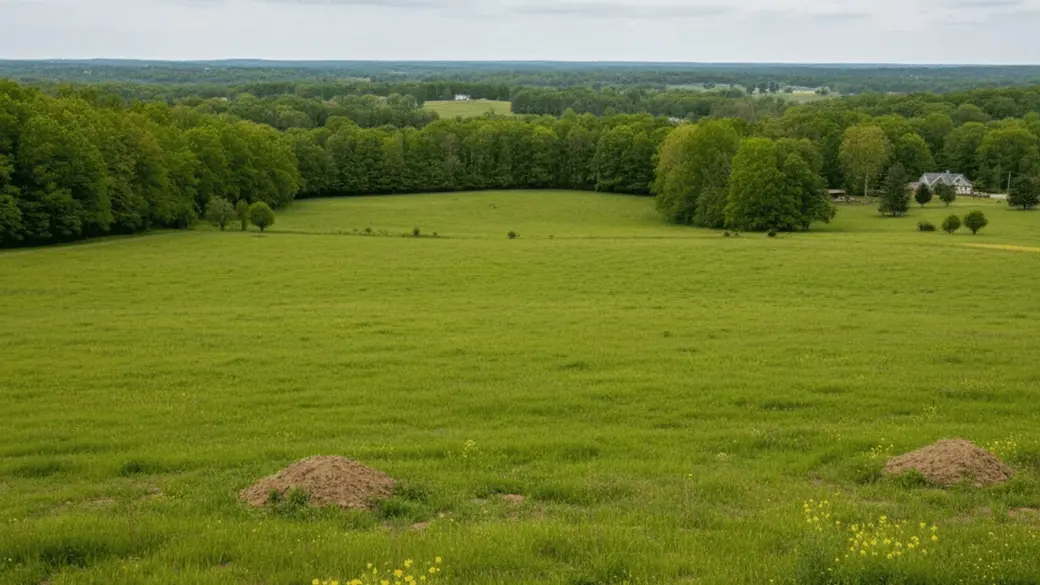
If you have been scrolling through listings lately, you have probably noticed a pattern. Owings Mills has plenty of inventory, but a lot of it is older stock—split-levels from the 1980s or standard townhomes that might not fit your vision of a modern dream home. For many buyers, the solution isn't waiting for the perfect renovation to hit the market; it is deciding to build my own home in Owings Mills MD.
Building a custom home is an emotional journey as much as a financial one. There is something incredibly satisfying about walking through a floor plan that was designed specifically for your lifestyle, rather than trying to fit your life into a layout someone else chose thirty years ago. However, the process in Baltimore County has its own set of quirks, from specific zoning laws to new fee structures. In this guide, we will walk through the real costs, how to find the right plot of dirt, and what the timeline looks like for 2026.
Is Building Feasible in Owings Mills Right Now?
Before we start picking out tile and cabinets, we need to have an honest look at the numbers. The "buy vs. build" conversation in this zip code is unique because of the gap between existing home prices and new construction costs.
Currently, the median list price for existing homes sits around $390,000. That number is heavily weighted by the abundance of townhomes and older single-family properties. On the other hand, the entry point for a true custom build—excluding the land cost—often starts north of $600,000. If you are looking for a bargain, building isn't it. But if you are looking for specific modern amenities, energy efficiency, or a large lot that you simply cannot find in Towson or Baltimore City, building becomes a very attractive option.
The major advantage here is inventory control. You are not fighting a bidding war for a house you only "sort of" like. The downside, naturally, is the upfront cash requirement and the patience required. You need to be ready for a longer road than the standard 30-day closing.
Cost to Build a House in Owings Mills (2026 Estimates)
When clients ask me about the price tag, I tell them to think in two buckets: the "Hard Costs" (materials and labor) and the "Soft Costs" (paperwork and prep).
For the build itself, prices have stabilized somewhat compared to the volatility of a few years ago, but they are still significant.
- Builder Grade finishes generally land between $250 and $350 per sq ft.
- Custom or Semi-Custom projects are typically $350 to $450 per sq ft.
- Luxury builds with high-end architectural details will easily run $500+ per sq ft.
Beyond the bricks and sticks, you have the soft costs. This includes your architectural fees, site engineering, and permits. There is one specific cost in Baltimore County you need to watch out for: the Development Impact Fee. As of late 2024 and continuing into 2026, this fee is approximately $6.00 per sq ft for residential construction. This is a crucial detail because, unlike some closing costs that get rolled into a loan, this fee must be paid before the building permit is issued.
Finally, do not forget site prep. If you are building in the denser parts of town, you likely have public water and sewer. However, if you are looking at land in the outskirts like Garrison or near Caves Valley, you will likely need a septic system and well, which introduces variable costs depending on the soil quality.
Finding and Evaluating Land in Owings Mills
You can't build a house without the land, and in Owings Mills, location dictates everything. You generally won't find buildable lots in the dense Metro Centre area. Instead, you will want to look toward areas like Greenspring Valley, Caves Valley, or infill lots off Reisterstown Road.
When you find a potential spot, the first thing to check is the zoning. Baltimore County distinguishes between zones like RC5 (Rural Conservation) and DR (Density Residential). These designations dictate how much of the land you can actually cover with impervious surfaces like driveways and roofs.
Due diligence is non-negotiable here. If the lot requires a septic system, you must have a "perc test" (percolation test) done to ensure the soil drains well enough to support a system. Even if the land is cheap—sometimes under $200,000 for difficult infill lots—the cost to prepare it can be high. Conversely, pristine estate lots in prime areas can easily list for $1,000,000+, but they often come with fewer site prep headaches.
Financing Your Build: Construction Loans in Maryland
Unless you are sitting on a pile of cash, you will likely need a construction-to-permanent loan. This is different from a standard mortgage. It is a single loan that closes once, gives you the funds to build, and then automatically converts to a standard mortgage when the house is finished.
During the construction phase, you typically only make interest-only payments on the amount that has been drawn out to pay the builder. This keeps your monthly expenses lower while you are likely paying rent or a mortgage elsewhere.
Be prepared for a larger down payment than you might be used to. Lenders usually require 20% to 25% down for custom construction projects to mitigate their risk. As for interest rates, they are generally anchored to the prevailing market trends. With standard 30-year fixed rates hovering around 6.1% in January 2026, you can expect construction loan rates to be slightly higher or variable during the build phase before locking in upon completion.
Vetting Custom Home Builders in Owings Mills
Choosing a builder is like a short-term marriage; you are going to be communicating with them constantly for over a year. It is vital to find someone who knows the local landscape. Reputable local names often mentioned include J Paul Builders, Owings Brothers, or Creative Home Co.
When interviewing builders, ask specific questions to test their local knowledge. Ask them, "Are you familiar with the new impact fee structure in Baltimore County?" or "Do you handle the submission process through the online permit portal?" Their answers will tell you if they are active and up-to-date.
Always verify their standing. You should check the Maryland Home Builder Registration (MHBR) unit to ensure they are licensed and insured. A great builder will have no problem showing you current active job sites, not just finished glossy photos.
Navigating Baltimore County Permits & Zoning
Once you have your team and your land, you enter the paperwork phase. In this area, you will be dealing with the Baltimore County Department of Permits, Approvals and Inspections (PAI).
The good news is that the county has modernized. Applications go through the "Baltimore County Online Permit System," which makes tracking the status of your application much more transparent than the old paper days. The process usually moves from zoning review to building plan review.
Once your plans are approved, that is when the wallet opens for the Development Impact Fee. Remember, the county will not release the physical permit until that fee is paid. In terms of timing, you should budget 4 to 8 weeks for this approval process, though it can fluctuate depending on the backlog at the county office.
Typical Construction Timeline: From Dirt to Door Keys
Patience is your best asset when building. A realistic timeline for a custom home in Maryland is usually 12 to 18 months from the moment you decide to build until you move in.
The first 3 to 6 months are often eaten up by "pre-construction" tasks: finalizing the land purchase, getting the architectural designs just right, securing financing, and waiting on those permits.
The actual physical construction usually takes 9 to 12 months. Keep in mind that living in Owings Mills MD means dealing with four distinct seasons. If your foundation dig is scheduled for January or February, frozen ground or heavy snow can cause delays. A smart builder will try to get the house "under roof" (weathertight) before winter sets in so work can continue inside regardless of the weather.
FAQ: Building in Owings Mills
How much does the Baltimore County impact fee cost in 2026?
The Development Impact Fee for residential construction is approximately $6.00 per square foot. This fee must be paid in full to Baltimore County before your building permit will be issued, so it is a significant upfront cost to budget for.
How long does it take to build a custom home in Maryland?
You should plan for a total timeline of 12 to 18 months. This includes the pre-construction phase of design and permitting (3–6 months) followed by the actual build time (9–12 months), depending on weather and material availability.
Do I need a perc test to build in Owings Mills?
It depends on the specific lot. If the land is located in an area with public sewer access (common near the town center), you do not need one. However, if you are buying in semi-rural areas like Greenspring Valley where septic systems are required, a passed percolation (perc) test is mandatory to build.
What is the price per square foot to build in Baltimore County?
For 2026, you can expect to pay between $350 and $450 per square foot for a custom or semi-custom home. Luxury builds with high-end finishes will likely exceed $500 per square foot, while basic builder-grade finishes might be closer to $300.
Is Building Your Dream Home Worth It?
There is no getting around the fact that building is more expensive and time-consuming than buying an existing house. But for many, the trade-off is worth it. You get a home that is energy-efficient, covered by new warranties, and designed exactly for how you live today.
If you are on the fence, the next best step is to look at some land and run the real numbers. Connect with a local real estate agent who specializes in land and new construction—they can help you navigate the search and ensure you don't get stuck with a lot you can't build on.
Categories
Recent Posts
GET MORE INFORMATION

Sales Director, Realtor License ID: MD: 662897 / PA: RSR005460
+1(410) 905-6678 | mike@mykeyhometeam.com