
Property Taxes in Owings Mills, MD: A 2026 Guide
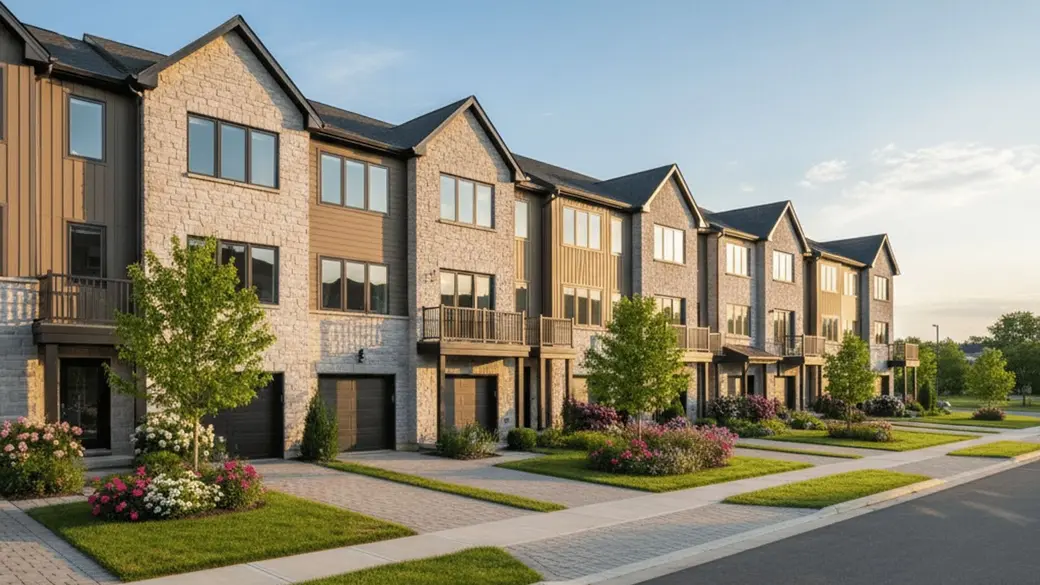
If you are looking at homes in Owings Mills or just opening your latest assessment notice, the numbers can feel a little overwhelming. Property taxes are one of the biggest ongoing costs of homeownership, yet they are often the least understood.
It is important to start with a crucial distinction: Owings Mills is located in Baltimore County, not Baltimore City. This matters immensely for your wallet because the tax structures are completely different. As of February 2, 2026, the rates in the County remain significantly lower than the City, which is a major draw for buyers looking here.
Your total tax bill isn't just one number; it is a stack of a few different charges. You have your base County tax, the Maryland State tax, and potentially some extra fees depending on exactly which neighborhood or development you choose. Let's break down exactly what you can expect to pay this year.
Current Property Tax Rates for Owings Mills (2026)
When you look at the bottom line of a property tax bill in Owings Mills, you are seeing a combination of local and state levies. For the 2026 tax year, the rates have remained competitive, especially compared to neighboring jurisdictions.
The Baltimore County base rate is currently $1.10 per $100 of assessed value. On top of that, you have the Maryland State rate, which is $0.112 per $100. When you add those together, your standard total rate is approximately $1.212 per $100 of assessed value.
To put that in perspective, Baltimore City's rate is historically closer to $2.248. This means living just across the line in Owings Mills can essentially cut your property tax liability nearly in half compared to a similarly priced home in the city limits. It is also worth noting that while assessments often rise with the market, the County generally aims to keep the "Constant Yield" relatively steady to prevent tax bills from ballooning purely due to inflation.
How to Calculate Your Tax Bill: Real Examples
Knowing the rate is helpful, but seeing the actual math makes it real. The formula is simple: take your home's assessed value, divide it by 100, and multiply it by the total rate ($1.212).
Let’s look at a few scenarios you might encounter when looking at homes for sale in Owings Mills:
- The Median Home: If you buy a detached home assessed at $400,000, your annual base tax would be approximately $4,848. This splits roughly into $4,400 going to the County and roughly $448 going to the State.
- The Luxury Home: For a larger estate or new construction assessed at $750,000, you are looking at an annual bill around $9,090.
- The Townhome or Condo: For a starter home or condo assessed at $275,000, the yearly taxes would be about $3,333.
Keep in mind these figures cover the real estate taxes. They do not include other annual charges that often appear on the same bill, such as stormwater remediation fees, trash collection fees, or sewer charges.
Hidden Costs: Special Taxing Districts in Owings Mills
While the standard rates apply to almost everyone, some specific neighborhoods have an extra layer of cost known as a "Special Taxing District." These are often newer developments where the developer used municipal bonds to pay for infrastructure like roads and sewers, and that cost is passed on to the homeowners.
A prime example is the Metro Centre at Owings Mills. If you buy a modern condo or townhome in that specific development, you will likely see a special tax surcharge on your bill. This isn't a mistake; it is a recapture fee for the development's infrastructure.
Before you make an offer, always check the listing disclosures or the SDAT real property search for terms like "Special Tax Recapture." These fees can add several hundred dollars to your annual expenses, so you want to factor them into your monthly budget before you get to the closing table.
Understanding Assessments & The 3-Year Cycle
In Maryland, your home isn't reassessed every single year. The State Department of Assessments and Taxation (SDAT) operates on a triennial cycle, meaning your property is reassessed once every three years.
For the 2026 tax year, "Group 2" properties were up for reassessment. If you are in this group and your property value went up, you get a nice buffer called the "Phase-In" benefit. If your assessment jumped by $30,000, the state doesn't tax you on that full $30,000 increase immediately. Instead, they phase it in at $10,000 per year over the three-year cycle.
It is also important to remember that Maryland assesses at 100% of market value. Some other states use a fractional system (like assessing at 40% of value), but here, if your house is worth $500,000, your assessment goal is $500,000.
The 4% Cap: Maryland Homestead Tax Credit
This is the single most important tool for keeping your cost of living in Owings Mills manageable. The Homestead Tax Credit limits how much your taxable assessment can increase each year, regardless of how much your home's actual value has skyrocketed.
While the state cap is 10%, Baltimore County has one of the most homeowner-friendly caps at just 4%. This means even if your home's value doubles overnight, your tax bill can only rise by 4% that year. Over a decade of ownership, this can save you thousands of dollars compared to a neighbor who forgot to file.
Eligibility is simple: it must be your primary residence. You have to file a one-time application to "lock in" this status. If you are buying a home in Owings Mills this year, make this your first priority after closing. Do not wait until the bill arrives, or you might miss the window for the current year.
Other Exemptions & Tax Credits
Beyond the Homestead Credit, there are other programs designed to help specific groups of homeowners.
- Homeowners' Property Tax Credit: This is based on household income. If your income falls below a certain threshold, you may qualify for a credit that caps your tax bill at a manageable percentage of your earnings.
- Senior Tax Credit: Residents aged 65 and older may qualify for additional relief, though this often has criteria linked to income or longevity in the home.
- Disabled Veterans Exemption: This is a powerful benefit. Veterans with a 100% service-connected disability rating from the VA are typically exempt from paying property taxes entirely on their primary residence.
Most of these applications have specific deadlines, usually around September 1 or October 1. If you think you qualify, check the latest forms early in the year.
When & How to Pay Your Tax Bill
So, when does the county actually want their money? Tax bills are issued on July 1 each year.
Technically, the bill is due on July 1, but you have a grace period. It is interest-free if paid by September 30. If you live in the property as your primary residence, you can also pay in two installments: the first half by September 30 and the second half by December 31.
If you have a mortgage, you likely won't have to write a check yourself. Your lender typically collects money monthly into an escrow account and pays the county on your behalf. However, you should always check your annual escrow analysis statement to make sure the payment was made and that your monthly contribution is adjusting correctly for any rate changes.
For those paying directly, you can pay online via the Baltimore County portal, by mail, or in person at the county seat in Towson.
How to Appeal Your Assessment
If you open your reassessment notice in January and think, "There is no way my house is worth that much," you have the right to fight it.
You generally have 45 days from the date on the notice to file an appeal. Successful appeals usually rely on facts, not feelings. If the county lists your home as having 3.5 bathrooms but you only have 2.5, that is an easy win. Alternatively, if you can show recent sales of comparable homes in your neighborhood that sold for significantly less than your assessment, you have a strong case.
The process starts with the Supervisor of Assessments. If you aren't satisfied with that result, you can escalate to the Property Tax Assessment Appeal Board (PTAAB) and eventually the Tax Court, though most disputes are resolved at the lower levels.
Frequently Asked Questions
What is the property tax rate in Owings Mills, MD for 2026?
For the 2026 tax year, the combined rate is approximately $1.212 per $100 of assessed value. This includes the Baltimore County base rate of $1.10 and the Maryland State rate of $0.112.
Does Owings Mills have higher taxes than Baltimore City?
No, taxes in Owings Mills are significantly lower. The Baltimore City rate is roughly $2.248 per $100, while the Owings Mills (Baltimore County) rate is about $1.212 per $100, meaning you pay almost half the tax rate by living in the County.
How do I apply for the Homestead Tax Credit in Baltimore County?
You must submit a one-time application with the State Department of Assessments and Taxation (SDAT). You can do this online or by mail after you have purchased the home and established it as your principal residence; this caps your annual taxable assessment increase at 4%.
When are property taxes due in Baltimore County?
Annual tax bills are issued on July 1. To avoid interest and penalties, the first payment (or full payment) must be made by September 30, and if you are paying semiannually, the second installment is due by December 31.
Are there extra taxes for living in Metro Centre Owings Mills?
Yes, residents in Metro Centre and certain other newer developments may pay a "Special Taxing District" fee. This is an additional surcharge on top of standard property taxes to repay bonds used for the community's infrastructure development.
Categories
Recent Posts
GET MORE INFORMATION

Sales Director, Realtor License ID: MD: 662897 / PA: RSR005460
+1(410) 905-6678 | mike@mykeyhometeam.com