
The Real Cost of Living in Owings Mills: Understanding HOA Fees
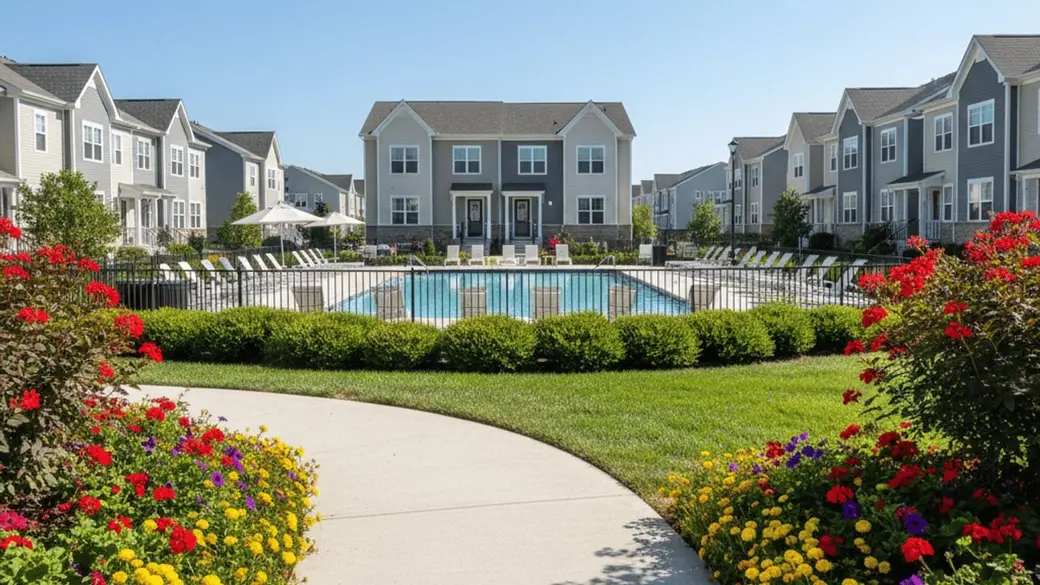
If you are looking at homes in Owings Mills, you’ve probably noticed the vibe right away. It’s a hub of planned communities, swimming pools, and manicured walking paths. It offers a level of "affordable luxury" that is hard to find elsewhere in Baltimore County.
But if you are seriously looking to budget for monthly housing costs here, looking at the mortgage payment alone isn't enough. You have to look at the "sticker price" versus the real monthly cost.
In Owings Mills, Homeowners Association (HOA) and condominium fees can range anywhere from a modest $40 per month to over $500 per month. That is a massive spread that drastically changes how much house you can afford. Plus, as of early 2026, fees across Maryland are under new scrutiny due to recent state laws regarding reserve funding.
Let’s break down exactly what you are paying for, so you can budget with confidence.
Average HOA and Condo Fees in Owings Mills (2026 Estimates)
When people talk about the overall cost of living in Owings Mills, they often lump all "community fees" into one bucket. However, real estate here generally falls into three distinct tiers. The type of property you buy dictates the fee.
Here is how the numbers usually shake out:
Single-Family Homes: These have the lowest dues. You are typically looking at about $30 to $100 per month. In many neighborhoods, this is billed quarterly or annually. This money usually just covers the entrance signage, basic common area landscaping, and maybe a small playground.
Fee Simple Townhomes: This is the middle ground. Dues often range from $80 to $150 per month. In a fee simple townhome, you own the land beneath your feet. The fee generally covers trash removal, snow removal on the streets (but not always your driveway), and maintenance of common green spaces.
Condo Townhomes & Apartments: This is where buyers often get sticker shock. Fees here typically run $300 to $500+ per month. Why so high? Because these fees cover the exterior of the building (roof, siding), the master insurance policy, and often extensive amenities like pools and clubhouses.
Fee Structures in Top Owings Mills Communities
To give you a concrete idea of what to expect, let's look at a few of the most popular neighborhoods. Keep in mind that fees vary by specific subdivision, but these are good benchmarks.
New Town (The Master Planned Community): If you are reading a guide to New Town Owings Mills, you will see it described as a "Master Planned Community." Financially, this often means a two-layer fee structure.
- The Master Fee: Almost everyone pays a base fee to the Community Association (often called the CPRA) for the pools, dog parks, and trails.
- The Village/Condo Fee: Depending on which "village" you live in, you may have a second fee for your specific street or condo building.
Ballard Green: This community is a favorite for its amenities, including a large clubhouse and pool. Because of those perks, fees are often split between a master HOA and specific condo dues. Total monthly costs here frequently land in the $300s to roughly $375 range for townhome-style condos.
Villages of Winterset: Winterset is known for being established and scenic. The fees here are generally on the lower end, often ranging from $34 to $90 per month (sometimes billed quarterly). Since many homes here are single-family or fee-simple, the HOA is primarily maintaining the common grounds and aesthetic standards.
Lyons Gate: This neighborhood offers a mix. If you buy a fee-simple unit here, your HOA cost might be very low, around $40 per month. However, the condo units within the same general area will have significantly higher monthly dues to cover the building exteriors.
A quick note on "Red Run": You will see "Red Run" pop up in searches often. Be careful—many listings in that area are actually rental apartments (like Avana) which charge amenity fees, but those aren't HOA dues. If you are buying, focus specifically on the purchase subdivisions.
Condo Fee vs. HOA Fee: What’s the Difference?
This is the number one source of confusion for anyone buying a home in Baltimore County. In Owings Mills, you can have two townhouses side-by-side that look identical. One has a $100 fee, and the other has a $400 fee.
You cannot always tell the difference just by looking at the brick and mortar. You have to look at the legal ownership structure.
The Condo Fee ("Studs-Out"): If you buy a condo townhome, you generally own the "air" inside the unit, from the paint on the walls inward. The association is responsible for the "studs-out"—the roof, siding, gutters, and lawn care.
- The Trade-off: You pay a high monthly fee, but your personal homeowner's insurance (HO-6 policy) is very cheap because you aren't insuring the structure itself.
The HOA Fee ("Lot-Line") If you buy a fee-simple townhome, you own the structure and the land. The HOA fee covers "lot-line" stuff like the shared grass and parking lots.
- The Trade-off: Your monthly fee is low, but you are responsible for replacing your own roof and siding. Consequently, your homeowner's insurance premium will be higher.
What Do Your Dues Actually Pay For?
When you cut that check every month, where does the money go? In this area, it usually funds three main buckets:
- Amenities: Owings Mills is pool-heavy. Dues pay for lifeguards, pool chemicals, tennis court resurfacing, and gym equipment maintenance.
- Maintenance: This includes landscaping of common grounds and trash removal (some communities have private pickup rather than county). Snow removal is a big one—always verify if the HOA shovels your personal driveway or just the main road.
- Reserves: This is the community savings account. A portion of your dues goes into a fund for future big-ticket items, like repaving the parking lot or replacing the roof on a condo building.
New Maryland HOA Laws: The 2026 Reserve Mandate
If you looked at fees a few years ago, you might find they look different today. As of early 2026, Maryland has implemented stricter rules regarding "Reserve Studies" (specifically referencing House Bill 107 and HB 292).
Here is the simple version of what changed:
- Mandatory Studies: HOAs and Condos with significant assets must conduct a professional reserve study every 5 years to see if they have enough money saved for repairs.
- Mandatory Funding: In the past, a Board could ignore the study to keep fees low. Now, the law requires them to actually fund the reserves according to the study's recommendations.
What this means for you: Some older communities in Owings Mills may have kept fees artificially low for years. To comply with the 2026 laws, they may have to raise fees to catch up on their savings. If you see a sudden fee hike, it is likely the Board acting responsibly to protect property values.
Tips for Reviewing HOA Docs Before You Buy
Once you go under contract, Maryland law gives you a specific time period (usually 5 to 7 days) to review the "Resale Packet." Do not just skim this massive PDF.
- Check the "Reserve Study": Look for a percentage. If the reserves are under 30% funded, the community might be at risk for a fee hike. If it’s over 70%, that is a very healthy financial sign.
- Look for Special Assessments: These are extra, one-time fees charged to owners for big projects that the savings account couldn't cover.
- Read the Rules: Can you rent out the basement? Are there breed restrictions for dogs? Can you build a deck? The time to find this out is before you close, not after you move in.
Frequently Asked Questions
Why are HOA fees in Owings Mills so high compared to other areas?
Owings Mills has a high concentration of "condo regime" townhomes and amenity-rich communities. You are paying for extensive exterior maintenance (roofs, siding) and lifestyle perks like pools and clubhouses that simpler neighborhoods in other parts of the county don't offer.
Can HOA fees go up in Maryland?
Yes. Generally, there is no hard legal "cap" on how much an HOA can increase the operating budget to meet expenses, though significant increases often require a community vote. With the new 2026 reserve funding laws, many boards are legally required to increase fees to ensure financial health.
Do HOA fees in Owings Mills cover water and sewer?
It depends on the property type. For many condominium townhomes and apartments, water and sewer are included in the monthly fee. For fee-simple townhomes and single-family homes, you will almost always pay a separate water bill to Baltimore County or the city.
What is the difference between New Town's CPRA and a standard HOA?
New Town is a Master Planned Community, so the CPRA (Community Parks and Recreation Association) is the "umbrella" organization that manages the shared amenities for the whole area. A standard HOA or Condo Board manages your specific cluster of homes. Residents usually pay assessments to both.
Are reserve studies mandatory for all HOAs in Maryland?
As of the recent legislation effective for 2026 budgets, reserve studies are mandatory for Maryland cooperatives, condos, and HOAs that have more than $10,000 in common area components. They must not only conduct the study but also budget to fund it.
Categories
Recent Posts
GET MORE INFORMATION

Sales Director, Realtor License ID: MD: 662897 / PA: RSR005460
+1(410) 905-6678 | mike@mykeyhometeam.com