
Owings Mills vs. Columbia Cost of Living & Lifestyle
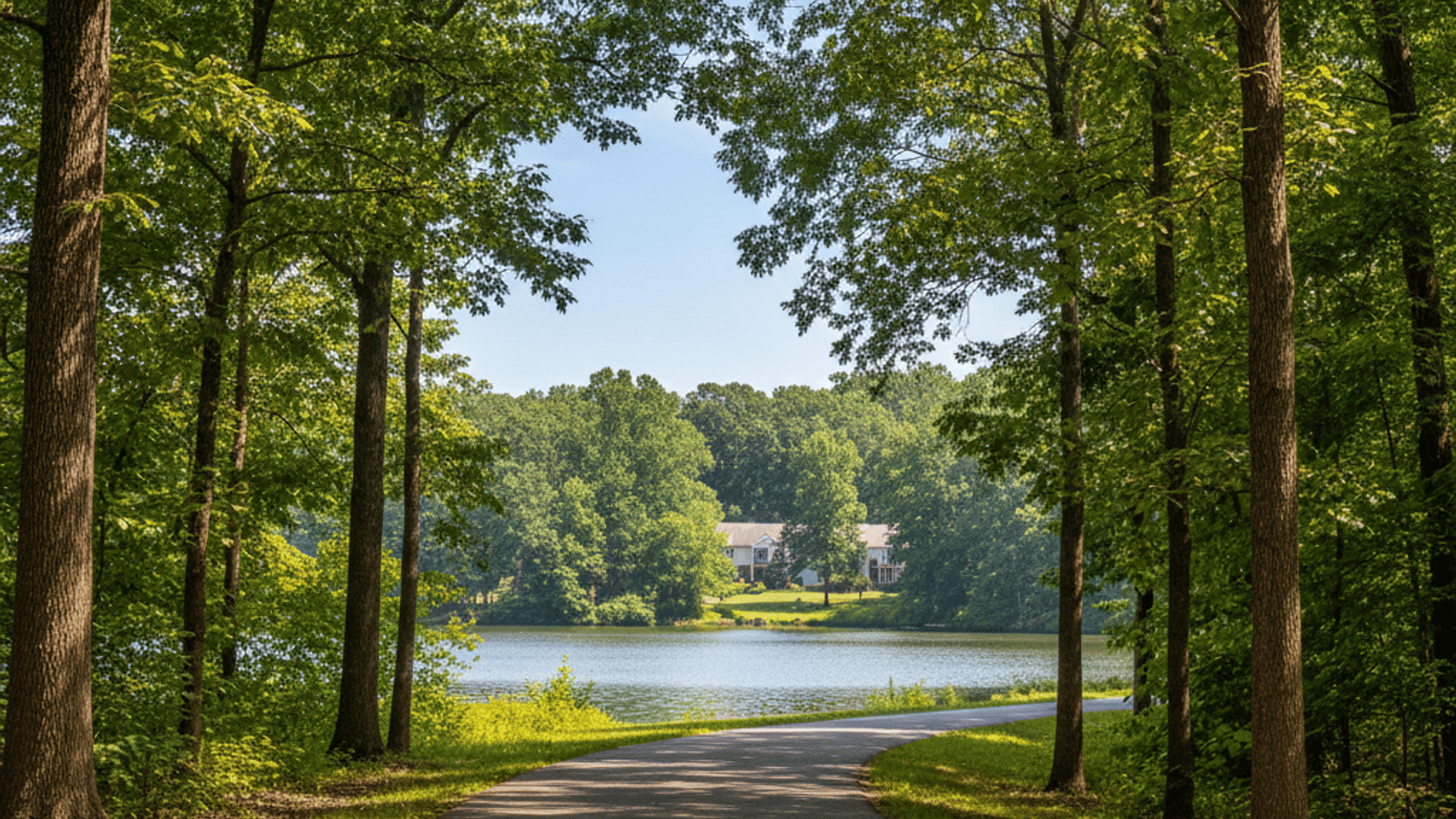
If you are looking into moving to Maryland, you have likely narrowed your search to a few key areas. Two of the biggest contenders are often Owings Mills and Columbia. On paper, they might look similar—both are large suburban hubs with plenty of shopping and easy highway access. But once you get on the ground, the vibes are completely different.
Columbia is a master-planned community in Howard County known for its distinct "village" concept, extensive trail networks, and the Columbia Association. Owings Mills, located in Baltimore County, feels more like a rapidly developing urban-suburban hub with a major focus on new retail and direct subway access to downtown Baltimore.
Geography plays a huge role here. Owings Mills sits northwest of Baltimore, making it a straight shot into the city. Columbia sits southwest, effectively acting as the bridge between Baltimore and Washington, D.C. Let’s break down the real costs, commutes, and lifestyles so you can decide which spot makes sense for you.
Cost of Living and Housing Market
When we sit down with buyers, the first thing we usually look at is the price tag. Generally speaking, your money goes a little further in Owings Mills than it does in Columbia.
In the current market, the median home price in Owings Mills hovers around the $375,000 mark. You can find townhomes, condos, and single-family homes, often with a slightly lower barrier to entry. Columbia, being in high-demand Howard County, usually commands a premium. Median prices there are often in the $450,000 range or higher, depending on which "village" you choose.
The "Columbia Association" Factor
There is one massive financial detail you need to know about Columbia: the CPRA fee. If you buy a home in most parts of Columbia, you aren't just paying property taxes; you are also paying an annual charge to the Columbia Association (CA).
This is currently capped at 68 cents per $100 of your property’s assessed value. So, if your home is assessed at $400,000, you are looking at roughly $2,720 extra per year. This fee funds the pools, trails, and open spaces.
In contrast, Owings Mills does not have a city-wide fee. You will likely pay a standard HOA fee or condo fee if you live in a specific development, but it rarely scales with your property value the way the Columbia lien does.
Rental Market Snapshot
If you are planning on renting, the gap narrows slightly. Owings Mills has seen a boom in luxury apartments, particularly around Metro Centre.
- Owings Mills 2-Bedroom: Market estimates often range from $1,800 to $2,100 per month.
- Columbia 2-Bedroom: You are typically looking at $2,000 to $2,400 per month, though older garden-style apartments can be cheaper.
Commuting: Access to Baltimore and DC
Commuting is usually the tie-breaker for our clients. Where you work dictates where you should live, perhaps more than any other factor in this comparison.
Owings Mills is arguably the best suburb for people working in downtown Baltimore. The Metro SubwayLink station in Owings Mills is a huge asset. You can park your car and be at Charles Center or Johns Hopkins Hospital in about 25 minutes, skipping the rush hour gridlock on I-795. If you drive, it is usually a 20 to 30-minute trip depending on traffic.
However, if you work in Washington, D.C., living in Owings Mills is tough. You have to drive south on I-795, loop around the Baltimore Beltway (I-695), and then head down I-95. That commute can easily exceed 90 minutes one way on a bad day.
Columbia is the strategic "sweet spot" for dual-commuter households. If one person works in Baltimore and the other works in D.C. or Bethesda, Columbia is the compromise. It offers direct access to I-95, Route 29, and Route 32. It is about 25 to 30 minutes to Baltimore and roughly 45 to 60 minutes to D.C., depending on where in the district you are going. While Columbia doesn't have a subway station, it is serviced by commuter buses and is a short drive to MARC train stations like Dorsey or Jessup.
Lifestyle, Amenities, and Shopping
This is where the personality of each town really shines. Columbia was built with nature in mind; Owings Mills was built with convenience in mind.
Columbia feels green and deliberate. The area boasts about 95 miles of walking and biking pathways that connect the different villages. You have Lake Kittamaqundi for waterfront strolling and the famous Merriweather Post Pavilion for major concerts. The Mall in Columbia is a massive regional attraction, but the day-to-day feel is very much about integrating housing with nature.
Owings Mills has transformed into a retail powerhouse over the last decade. It offers dense, convenient shopping hubs that make running errands incredibly easy.
- Foundry Row: A very popular spot featuring a massive Wegmans, varied dining options, and specialty shops.
- Mill Station: Built on the site of the old mall, this open-air center features a Costco, Lowe's, and an AMC theater.
- Metro Centre: A mixed-use development that combines residential living with the library, community college, and restaurants.
If you want deep woods and hiking near Owings Mills, you aren't out of luck. You are very close to Soldiers Delight Natural Environment Area and Northwest Regional Park, but the town itself feels more commercial than Columbia.
Education and School Districts
For many moving to Maryland, schools are a top priority. It is important to look at the specific data for the schools zoned to the house you are considering.
Columbia is served by the Howard County Public School System (HCPSS). This district is frequently highlighted for high graduation rates and a wide breadth of extracurricular programming. Because Columbia is so established, the schools there often have strong community support and involvement.
Owings Mills falls under Baltimore County Public Schools (BCPS). The county is large and offers a variety of educational environments, including magnet programs that draw students from across the region. Performance and resources can vary depending on the specific school zone, so we always encourage buyers to check the Maryland Report Card for the most current data on student growth and test scores.
Safety and Community Atmosphere
When people ask about safety, we always recommend looking at the official police data, as perceptions can be misleading.
Columbia generally records lower rates of violent crime compared to state averages. The "village" design, with its cul-de-sacs and walking paths, tends to promote a cohesive neighborhood atmosphere where neighbors know each other.
Owings Mills is a mix. The residential pockets, especially those tucked away from the main roads, are generally quiet. However, because Owings Mills has such high-traffic retail hubs (like around the Metro and Reisterstown Road), property crime rates—such as theft from autos or shoplifting—can be higher in those commercial zones compared to the residential interiors of Columbia.
For the most accurate picture, you can view the crime mapping tools provided by the Howard County Police and Baltimore County Police.
Which is Better for You?
Choosing between these two really comes down to your daily routine and your budget.
You might prefer Columbia if: You want a community that feels established and green. If you love the idea of walking trails right outside your door, enjoying summer concerts at Merriweather, and need a manageable commute to D.C. or a midpoint for two different workplaces, the cost of living in Maryland here—including the extra CPRA fee—is often worth it for the lifestyle.
You might prefer Owings Mills if: You work in Baltimore and want a stress-free commute via the subway. It is also the better choice if you want to keep your housing costs lower while still getting a modern home. If you prefer having a Wegmans, Costco, and luxury gym all within a five-minute drive, the convenience of Owings Mills is hard to beat.
Frequently Asked Questions
Is it cheaper to live in Owings Mills or Columbia, MD?
Owings Mills is generally cheaper. Housing prices are typically lower, with median home values around $375,000 compared to $450,000+ in Columbia, and you avoid the annual Columbia Association assessment fee.
Does Owings Mills have a community fee like Columbia?
No, Owings Mills does not have a city-wide community lien like the Columbia Association (CPRA) fee. However, most townhome communities and condos in Owings Mills will have their own standard HOA or condo fees to cover snow removal and common grounds.
Which area is better for commuting to Washington, D.C.?
Columbia is significantly better for commuting to D.C. It offers direct access to I-95 and Route 29, keeping the drive between 45 and 60 minutes, whereas a commute from Owings Mills to D.C. can easily take 90 minutes or more.
How far apart are Owings Mills and Columbia?
They are relatively close geographically, usually about a 20 to 30-minute drive apart via I-695 and I-70 or back roads, depending on traffic. Despite the short distance, they operate in completely different counties with distinct vibes.
Categories
Recent Posts
GET MORE INFORMATION

Sales Director, Realtor License ID: MD: 662897 / PA: RSR005460
+1(410) 905-6678 | mike@mykeyhometeam.com