
The History of Towson, MD: Origins, Timeline and the Neighborhoods Each Era Built
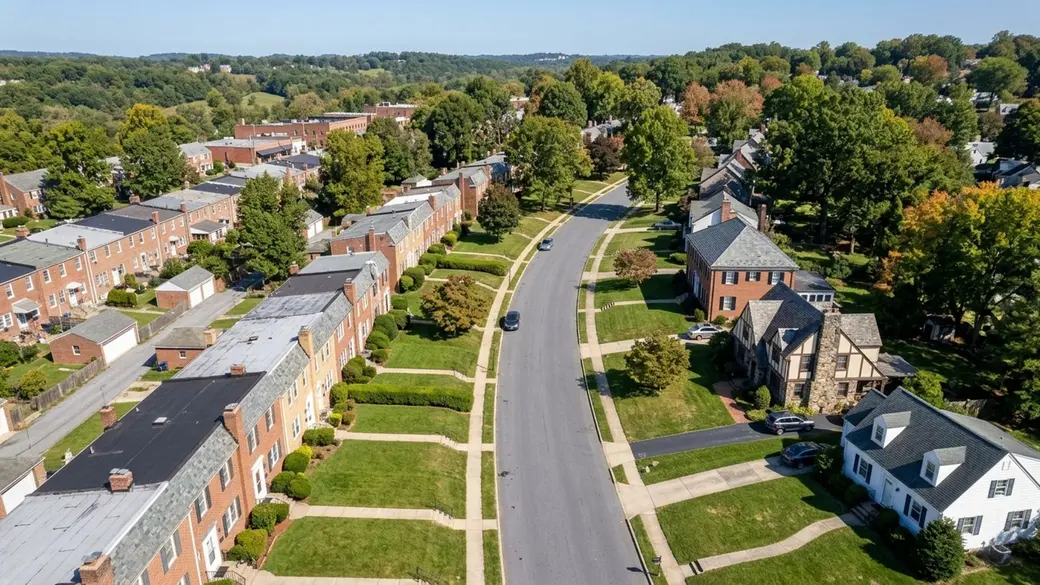
Towson's history is still sorted by housing type, and the era a home comes from now sets its price and your negotiating room more than its street does. Detached houses from the railroad and pre-war suburb eras sell at a $604,759 single-family median, up 10% year over year.
Pre-war rowhouses fell to a townhouse median down 11.7%, yet 41.3% still sold above list. The condo buildings of the later downtown era sit 56 days on market, based on 20 sales over the 90 days ending September 30, 2026.
Key Takeaway
Towson grew from a York Road tavern crossroads named for the Towson family into Baltimore County's seat, and each growth era left its own housing that still sells differently today. To live inside that pre-war history at the lower price point, start with the rowhouses of Rodgers Forge. Townhouses in Towson sold at a $337,004 median over the 90 days ending September 30, 2026. For a detached house from the same era, Stoneleigh is the alternative at single-family prices.
Who This Guide Is For
You want to understand how Towson grew from a crossroads into Baltimore County's seat and which older neighborhoods still reflect that history before you narrow a home search.
How Towson Grew from a Crossroads to a County Seat
Towson grew in distinct eras, and each era's housing type now prices differently. The area started as a family crossroads on York Road before becoming the county seat in the 1850s.
Colleges and planned suburbs arrived in the 1900s, followed later by a downtown of offices, a mall, and high-rises. Towson remains an unincorporated community governed by Baltimore County, with no separate city government. The neighborhoods surrounding the commercial center map directly to these eras, and understanding this timeline helps you match your budget to the right property type.
A Timeline of Towson's Growth
Towson's development followed major transportation and political shifts in Maryland. Each century brought a new layer of infrastructure that changed how people used the land, and those shifts left distinct marks on the local map, from colonial estates to mid-century shopping centers. Tracing this timeline explains why the downtown looks the way it does today.
1750s to 1850: A Crossroads Tavern on York Road
The Towson family settled the area around 1752 at the junction of York and Joppa Roads. Ezekiel Towson later opened a stone tavern near what is now Shealy Avenue and York Road, making the spot a reliable stop for travelers and farmers heading south to Baltimore. The settlement became known as Towsontown, though the dominant landholder nearby was the Ridgely family.
Construction of their five-part Georgian-style Hampton mansion began in 1783, and upon its completion in 1790, the 24,000-square-foot Hampton Hall was believed to be the largest private home in the country. York Road remains the spine that the oldest blocks line up along. The downside is that little of the tavern-era fabric survives on York Road itself. Readers looking for 18th-century buildings will find them mainly at Hampton, not downtown.
1851 to 1900: Baltimore County Seat and Courthouse Town
Towson became the county seat because Baltimore City officially separated from Baltimore County under the Maryland Constitution adopted in 1851. The county needed a new seat of government, and Towson won the vote. The new Baltimore County Courthouse opened in Towson on January 5, 1857, and courts, lawyers, and county offices drew steady growth to the immediate blocks.
Historic East Towson was deliberately established in 1853 just north of Baltimore City, sitting close to the original 1,500-acre Hampton tract. The railroad brought suburban estates to the west, setting up Ruxton. What you give up is residential density downtown: the historic core is dominated by government uses, and most residential history sits in the surrounding neighborhoods.
1900 to Today: Colleges, Suburbs and a Downtown That Grew Up
The State Normal School moved to Towson and eventually became Towson University. Planned suburbs like Stoneleigh and Rodgers Forge followed in the 1920s to 1950s, and Goucher College also moved to a Towson campus during this period.
The post-war era brought regional retail, starting with the Hutzler's department store branch in 1952 and the Towson Town Center opening in 1959. Later decades saw high-rise condominium buildings constructed near downtown. This growth left behind three main housing types: detached pre-war houses, rowhouses, and condos. The catch is that the same growth that built the suburbs also brought a large university and a regional mall, so expect traffic and event-day congestion around York Road and the campus.
Historic Towson Neighborhoods and Their Eras
The local multiple listing service does not provide neighborhood-level pricing, so the figures below reflect Towson-wide averages by home type. Buyers can also check other older areas like Towson Manor, Aigburth Manor, and West Towson. The four neighborhoods below represent the major development waves that built the modern housing market.
East Towson
East Towson is the oldest surviving residential community tied to the courthouse-and-Hampton era. The property dates from the purchase of one-and-a-quarter acres of land by Daniel Harris in September 1853, and the neighborhood association maintains a 2026-2030 strategic plan for preservation work.
This is a small area hemmed in by downtown commercial growth, so few homes come up for sale. Check whether a property is on the Baltimore County landmarks list before planning exterior changes.
Ruxton
If you want a large lot from the railroad-suburb era, start with Ruxton. The community takes its name from Nicholas Ruxton Moore, an early landowner. The Northern Central Railway built a late-Victorian stone passenger station here in 1891, which served riders until 1959. Ruxton is detached-home territory known for its estate lots and mature trees.
Use the $266 Towson single-family median price per square foot as a baseline, and check the most expensive areas guide for Ruxton's premium. You can also compare a home here using the Ruxton vs West Towson guide. Older estate homes on big lots carry big upkeep. Ask whether a Ruxton-area home is on public water and sewer or on a well and septic system, and get the age of the roof, heating system, and electrical service before you offer.
Stoneleigh
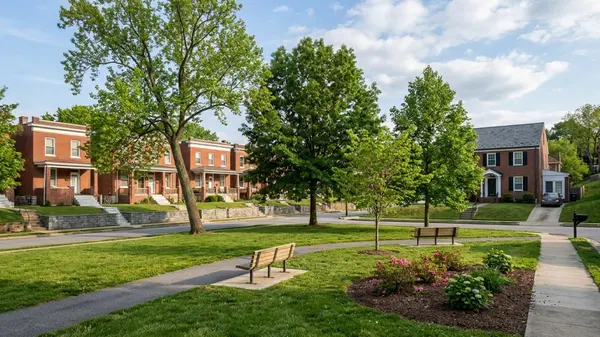
If you want a detached house from the 1920s planned-suburb era close to York Road, start with Stoneleigh. A 110-acre section of the neighborhood was platted in 1922 by the Stoneleigh Corporation, developing primarily between 1922 and 1954 with streetcar and automobile access. The area features curving streets and a mix of house styles.
Single-family values rose sharply year over year, meaning pre-war detached houses are getting more expensive, and waiting has cost buyers money this year. Houses from this era often have small closets, original plumbing, and older wiring. Ask the seller for permits on any past renovations, and budget for updates.
Rodgers Forge
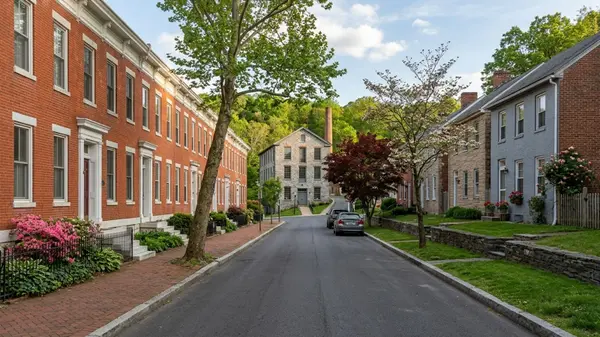
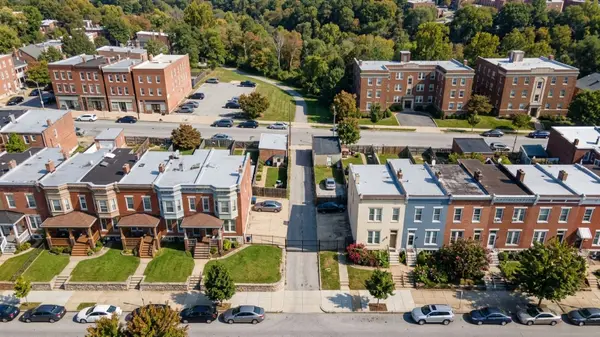
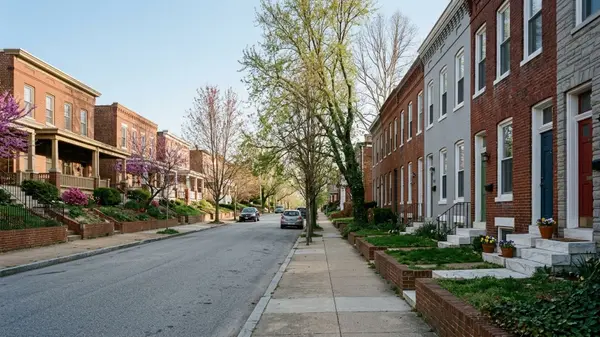
If you want a pre-war home at the lowest entry price among attached and detached houses, start with Rodgers Forge. This neighborhood represents the pre-war and post-war rowhouse era. Townhouse values fell year over year, yet more than four in ten still sold above list. Lower prices have not meant less competition, so expect to compete on the right house even in a falling-price segment.
What you give up is exterior space. Rowhouses share walls and often rely on rear-alley or street parking. Ask about parking, shared roof and party-wall repair history, and any neighborhood covenants on exterior changes.
Historic Landmarks to Visit Around Towson
Hampton National Historic Site offers tours of the mansion built by Captain Charles Ridgely. Construction on the five-part Georgian-style home began in 1783, and it remained in the Ridgely family for generations. Confirm current hours and admission for Hampton National Historic Site and the Historical Society of Baltimore County before visiting.
Downtown features the old courthouse, and visitors can take a self-guided Towson walking tour. Historic East Towson also maintains an active association for local preservation.
If a home is a designated landmark or sits in a county historic district, exterior changes may need review. The Landmarks Preservation Commission oversees 17 local County Historic Districts, and neighborhoods like Stoneleigh and Rodgers Forge are listed as National Register Historic Districts reviewed by the commission. Ask the county or check the Baltimore County landmarks list before you plan an addition.
How Towson's History Shapes the Housing Market
The gap between housing eras is clear in the numbers. Single-family homes command the highest median in Towson, while condos sit at the lowest. The condo era is where your money goes furthest and where you have the most room to negotiate, at 56 days on market and a sale-to-list ratio of 98%. On a condo listed at that median, that sale-to-list result implies a final price about $4,000 under asking. This median is based on only 20 condo sales, so treat it as a rough guide. If you want the most room to negotiate near the historic downtown core, start with condominium buildings near downtown Towson, and ask the condominium association for current dues, what they cover, the reserve study, and any planned special assessments.
Do you want a detached pre-war house or a shared-wall rowhouse? Detached points to Stoneleigh and Ruxton, while a rowhouse points to Rodgers Forge. Is living close to the courthouse-era core and York Road more important than lot size? Compare East Towson and Stoneleigh with Ruxton's larger railroad-era lots. Evaluating the pros and cons of living in Towson helps clarify these tradeoffs.
Is negotiating room more important to you than era? Condos are the only segment selling below list on average. Do you plan to renovate or add on to an older home? Read the landmark and historic-district check before you shortlist a specific house.
Review the Towson housing market and price trends to see recent sales, or read about moving to Towson and commute routes. You can also review safety and crime data for the area, and check the buying process, financing and closing costs when you are ready to start.
At a Glance
- All homes, Towson: $463,279 median sale price, up 5.5% year over year (164 sales, 90 days ending 2026-09-30)
- All homes, Towson: 42 median days on market, 100.9% sale-to-list, 2.4 months of supply (90 days ending 2026-09-30)
- Single-family homes, Towson: $604,759 median sale price, up 10% year over year, $266 per square foot (83 sales, 90 days ending 2026-09-30)
- Single-family homes, Towson: 40 median days on market, 35.4% sold above list (90 days ending 2026-09-30)
- Townhouses, Towson: $337,004 median sale price, down 11.7% year over year, $213 per square foot (59 sales, 90 days ending 2026-09-30)
- Townhouses, Towson: 41.3% sold above list, 2.2 months of supply (90 days ending 2026-09-30)
- Condos, Towson: $204,479 median sale price, up 1% year over year, $171 per square foot (based on only 20 condo sales, 90 days ending 2026-09-30; treat as a rough guide)
- Condos, Towson: 56 median days on market, 98% sale-to-list, 4.1 months of supply (based on 20 condo sales, 90 days ending 2026-09-30)
Towson, MD History FAQs
How Did Towson, MD Get Its Name?
The area was settled around 1752 by Pennsylvania-born brothers of the Towson family at the junction of York and Joppa Roads. Ezekiel Towson later opened a tavern at what is now Shealy Avenue and York Road. A 1768 court document describes Ezekiel Towson's stone tavern, and the settlement was earlier known as Towsontown.
Is Towson, MD a City?
No. Towson is an unincorporated community and a Census-designated place. It has no city government, and Baltimore County provides local government services.
What County Is Towson, MD in, and Is It Part of Baltimore?
Towson is the seat of Baltimore County, which is entirely separate from Baltimore City. The Maryland Constitution adopted in 1851 provided for the separation of the city from Baltimore County. Towson was chosen as the new county seat in 1854, and the new courthouse opened there in 1857.
What Is Towson, MD Known For?
Towson is known as the Baltimore County seat, anchored by the courthouse that opened in 1857. It is home to Towson University, Goucher College, and the Hampton National Historic Site completed in 1790. The area also features major retail centers like the Towson Town Center, which opened in 1959.
What University Is in Towson, MD?
Towson University is located here, having begun as the State Normal School in Baltimore before moving to its current location. Goucher College is also in Towson, and its move from a Baltimore City campus to the Towson campus was completed in 1954.
What Hospital Is in Towson, MD?
Towson is home to Sheppard Pratt, which opened in 1891. Greater Baltimore Medical Center is also located here, having been dedicated in 1965.
Sources
- Redfin: Data Center
- Historical Marker Database: Towson Tavern
- Maryland Manual On-Line: Baltimore County Chronology
- Maryland State Archives: Baltimore City Separation
- National Park Service: Hampton Mansion
- Baltimore County Government: East Towson Survey
- Goucher College: History Timeline
- National Library of Medicine: Sheppard Pratt History
- GBMC: History
- Baltimore County Government: Light Rail History
- Maryland Historical Trust: Stoneleigh Historic District
- Baltimore Sun: Hutzler's Towson
- Wikipedia: Towson Town Center
- Baltimore County Government: Landmarks List
Categories
Recent Posts
GET MORE INFORMATION

Sales Director, Realtor License ID: MD: 662897 / PA: RSR005460
+1(410) 905-6678 | mike@mykeyhometeam.com