
Getting Around Owings Mills, MD: A Commuter's Guide
If you are looking at homes for sale in Baltimore County, you have probably noticed that Owings Mills occupies a unique spot on the map. It acts as a "gateway" community, effectively bridging the gap between the rural, rolling hills of Northern Maryland and the urban energy of downtown Baltimore. For many buyers, this balance is the primary draw—you get the square footage and green space of the suburbs without feeling cut off from civilization.
However, the real estate motto "location, location, location" usually translates to "commute, commute, commute" once you actually move in. Owings Mills is distinct because it offers a hybrid lifestyle. You have massive highway infrastructure with Interstate 795, but you also have the northern terminus of the Metro SubwayLink.
Whether you are planning to drive into the city, catch a train to DC, or just need to know how to get to the grocery store, understanding the local transit landscape is key. Let’s break down exactly how you get from point A to point B in this bustling suburb.
The Crown Jewel: Owings Mills Metro Station (SubwayLink)
For many residents, the biggest perk of living in Owings Mills is the Metro SubwayLink. While much of the Baltimore suburbs rely solely on cars or slower light rail systems, Owings Mills sits at the very top of the "Green Line." This is a heavy-rail subway system, similar to what you might find in DC or New York, designed for speed and volume.
Because Owings Mills is the first stop (and the last stop on the return trip), you have a distinct advantage over commuters boarding in Pikesville or Rogers Avenue: you are practically guaranteed a seat. During the morning rush, you can settle in with a book or your laptop without fighting for elbow room. The line provides a direct shot to major employment hubs, including Charles Center in the business district, Lexington Market, and Johns Hopkins Hospital.
The time savings here are significant. A typical ride from the Owings Mills station to Charles Center takes approximately 26 minutes. Trying to drive that same route down I-83 or Reisterstown Road during peak rush hour could easily take twice as long.
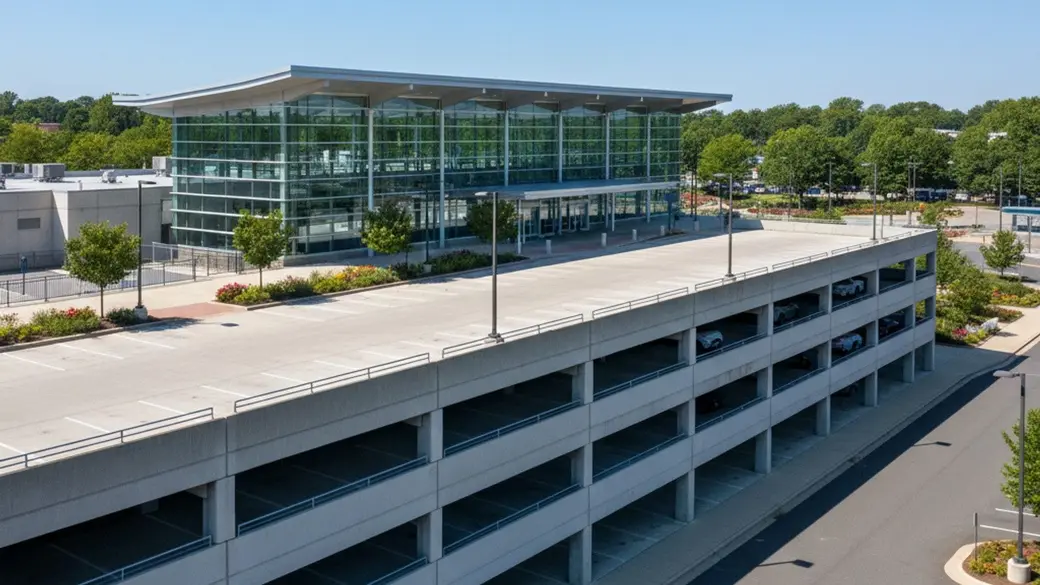
Another logistical win here is the parking situation. The station features a massive parking garage complex. Currently, the Maryland Transit Administration (MTA) offers free parking for daily commuters, which is a massive savings compared to paying for a garage downtown. It makes the "drive-to-ride" strategy a very popular option for professionals living in the surrounding subdivisions.
Driving & Highway Access: Navigating I-795
Of course, not everyone works downtown. If your daily life revolves around a car, your main artery is going to be Interstate 795, also known as the Northwest Expressway. This highway was built specifically to connect the northwestern suburbs to the Baltimore Beltway (I-695).
I-795 is a wide, well-maintained highway that allows for quick travel when traffic is flowing. From most parts of Owings Mills, you can be on the Beltway in about 10 minutes. However, like any major metro area, you have to be smart about your timing. The merge points where I-795 meets I-695 can get backed up during the standard 8:00 AM and 5:00 PM windows.
For local errands, your main thoroughfare is Reisterstown Road. This runs parallel to the highway and is where you will find the bulk of your shopping, dining, and car dealerships. While convenient, Reisterstown Road is known for traffic volume. It’s a slow-moving road with many traffic lights, so locals often learn back roads through neighborhoods to bypass the congestion during weekends.
Here is a quick look at what you can expect for drive times from central Owings Mills:
-
Downtown Baltimore: 25–35 minutes (non-peak), up to 50 minutes (rush hour).
-
Towson: 20–25 minutes via I-695.
-
Columbia: 30–40 minutes.
-
Washington DC Line: 45–60+ minutes depending on I-95 traffic.
Local Bus Routes & Accessibility
If you are looking at living in Owings Mills without a car, or if you have household members who don't drive, the bus network is the next layer of transit to consider. The MTA has rebranded and reorganized these routes under the "LocalLink" system to improve reliability and frequency.
The primary route serving the heart of the community is LocalLink 87. This bus connects the historic Glyndon area and Reisterstown directly to the Owings Mills Town Center and the Metro station. It serves as a vital connector for getting people from the residential pockets to the transit hub.
Another key route is LocalLink 89, which runs heavily along Reisterstown Road down to Rogers Avenue. This is the route you would likely use for local shopping trips if you aren't driving, as it hits many of the plazas and retail centers along the main corridor. While these buses are reliable, they are subject to surface street traffic, so they are generally slower than the subway. They are frequently used by students and seniors to maintain independence for medical appointments and grocery runs.
Walkability: Metro Centre vs. Residential Subdivisions
When discussing walkability in this area, we have to look at two very different realities. Owings Mills is currently undergoing a transformation where traditional suburban sprawl is meeting modern urban planning.
On one hand, you have Metro Centre at Owings Mills. This is the only true Transit-Oriented Development (TOD) in Baltimore County. If you rent an apartment or buy a condo here, your lifestyle is incredibly walkable. You can walk to the expansive public library branch, the community college (CCBC) extension, restaurants, gyms, and the subway station itself. Residents here can genuinely go days without turning on a car ignition.
Foundry Row is another hub that offers a "park once" experience. Anchored by a popular Wegmans, this lifestyle center allows you to hit the grocery store, grab dinner, and do some shopping on foot. However, unlike Metro Centre, most people still have to drive or take a bus to get to Foundry Row.
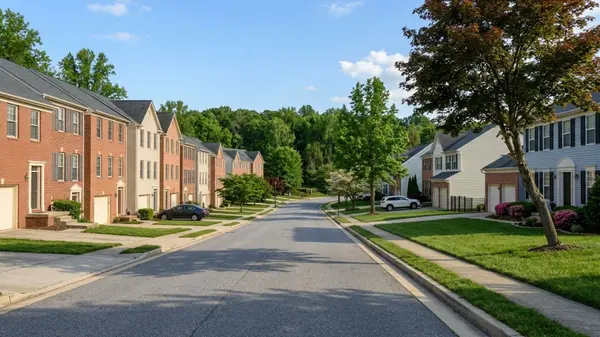
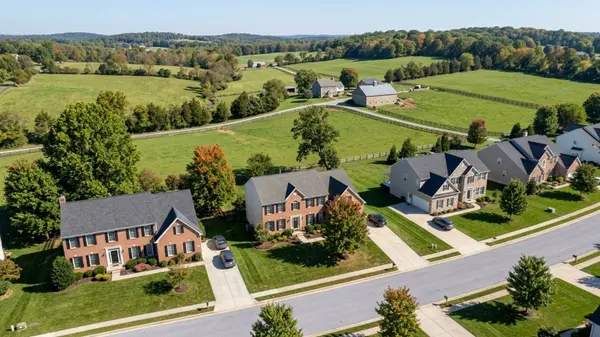
Contrast this with the traditional Residential Subdivisions like New Town, The Caves, or Velvet Valley. These neighborhoods are designed with winding streets and cul-de-sacs to keep traffic volume low. While they are wonderful for recreational walking or jogging, they are not "walkable" in the sense of running errands. If you buy a single-family home in these areas, you will almost certainly need a car for every trip to the store or school.
Connecting to DC, BWI, and Beyond
We often see buyers relocating to the area who work in Washington DC but want the affordability of Baltimore County. If that is your plan, you need to be realistic about the commute. Owings Mills is about 50 miles from DC, and I-95 traffic is notoriously unpredictable.
For a smoother trip to the capital, many residents skip the drive and use the MARC Train. You have two main options:
-
Drive to a MARC Station: You can drive about 20–25 minutes south to the Halethorpe or BWI Rail Station to catch the MARC Penn Line, which is fast and reliable.
-
Metro to Penn Station: You can take the SubwayLink from Owings Mills to downtown Baltimore, then take a short Uber or Light Rail transfer to Penn Station to catch the MARC.
When it comes to air travel, getting to BWI Thurgood Marshall Airport is relatively painless. It is roughly a 30 to 40-minute drive via I-695. Unfortunately, there is no direct "one-seat" public transit ride from Owings Mills to the airport. You would need to transfer downtown. However, because Owings Mills is a major hub, ride-share availability (Uber/Lyft) is very high, making early morning airport runs easy to book.
Frequently Asked Questions About Commuting in Owings Mills
Can you live in Owings Mills without a car?
Yes, but it depends heavily on where you live. If you choose a home in the Metro Centre development, you can easily live car-free by utilizing the subway, walking to amenities, and using delivery services. However, for most other neighborhoods in Owings Mills, a car is considered essential for daily errands.
How much is parking at the Owings Mills Metro Station?
Currently, daily parking for commuters at the Owings Mills Metro Station is free. This is a major incentive provided by the MTA to encourage ridership. However, policies regarding overnight parking or long-term storage may differ, so it is always smart to check the latest signage at the garage entrance.
Does the Light Rail go to Owings Mills?
No, the Light RailLink and the Metro SubwayLink are two different systems. The Light Rail services the Timonium and Hunt Valley corridor (I-83 corridor). Owings Mills is served by the Metro SubwayLink (Green Line), which is a heavy-rail subway system.
What is the commute time from Owings Mills to DC?
If you are driving during rush hour, you should budget at least 60 to 90 minutes each way due to congestion on I-95 and the Beltway. Using a combination of driving to a MARC train station and taking the rail into Union Station can make the commute more predictable and productive, usually taking about an hour total.
Categories
Recent Posts
GET MORE INFORMATION

Sales Director, Realtor License ID: MD: 662897 / PA: RSR005460
+1(410) 905-6678 | mike@mykeyhometeam.com